Destination · 28 min read
Clothing-Optional Florida: The Complete Guide to Nude Beaches, Resorts & The Pasco County Cluster
Florida has more naturist resorts than any other US state — concentrated in a single Pasco County cluster that has no parallel anywhere in the country — plus year-round warm-weather beaches at Haulover, Playalinda, Apollo, and Blind Creek. Here's where to go, what to expect, and what the law actually says.
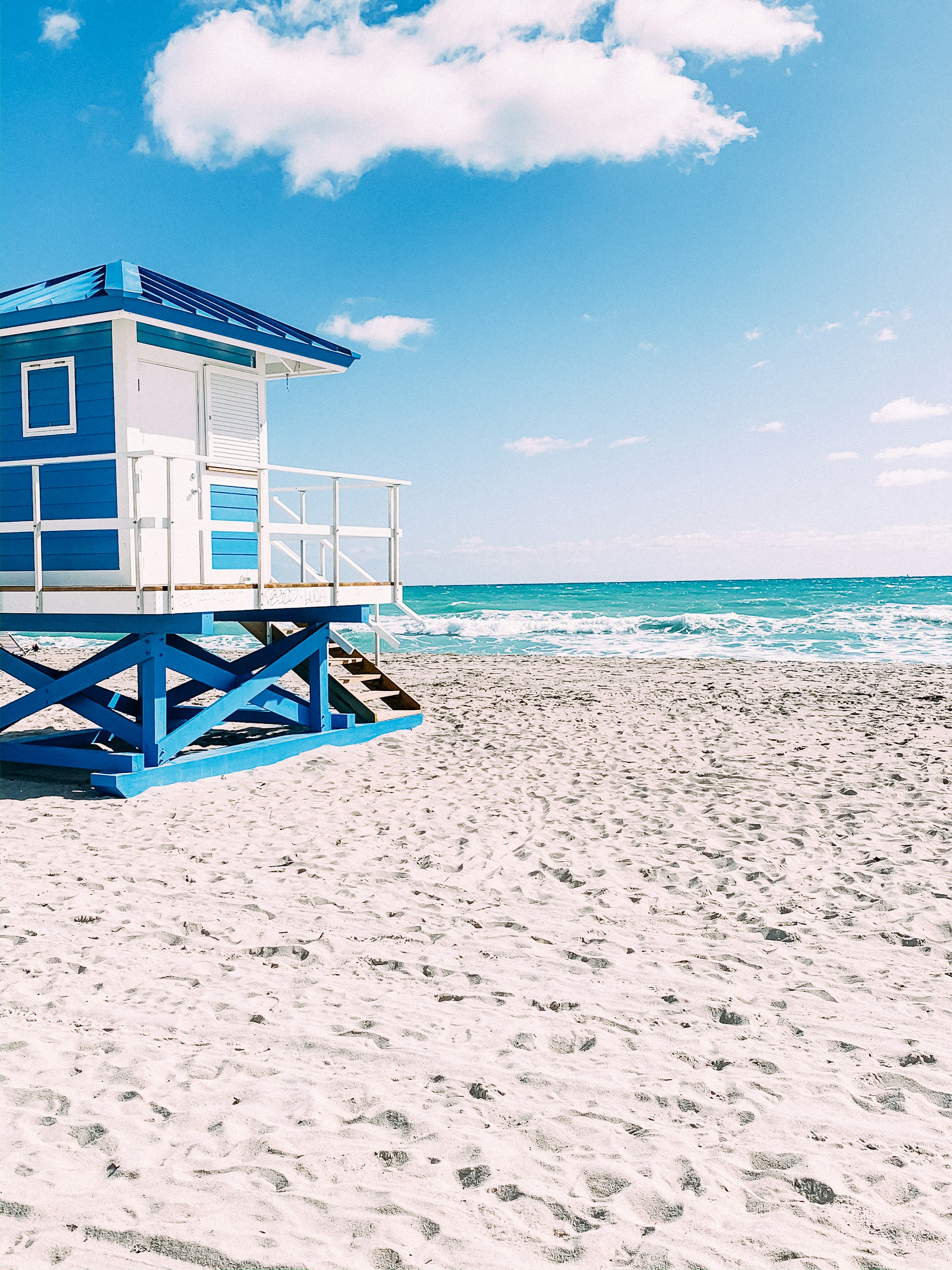
Florida has more clothing-optional terrain than any state except California, and a structural advantage neither California nor any other state can match: a single county where eight naturist resorts cluster within a fifteen-minute drive of each other, surrounded by residential neighborhoods built around clothing-optional living. The state also has four established nude beaches, including the most-visited nude beach in the United States, and a 24-mile stretch of federally-administered seashore where nude sunbathing has been quietly tolerated by the National Park Service for half a century.
The climate is the foundation. Florida’s clothing-optional terrain is usable year-round in a way that no other US state’s is — Haulover Beach sees its peak attendance in February, when California beaches are too cold for swimming, and the Pasco County resorts run a full activity calendar through December and January when Glen Eden and Laguna del Sol are dialing back. The trade-off is summer: June through September is hot, humid, prone to afternoon thunderstorms, and inside hurricane season. The locals understand the rhythm; visitors who plan around it find the beaches and resorts at their best.
The legal framework is permissive in spirit, narrow in letter. Florida Statute §800.03 criminalizes “indecent exposure” but only when the exposure is in a “vulgar or indecent manner.” Mere nudity, absent lewd intent, is not in itself a violation. The major established naturist places have all settled this question one of three ways: through formal county non-enforcement (Haulover Beach, where Miami-Dade County adopted a non-prosecution policy in 1991), through long-standing federal practice (Playalinda and Apollo Beach, where the National Park Service has not enforced clothing requirements for decades), or through private property authorization (every commercial resort and naturist residential community).
This is the field-checked guide to the places worth knowing about — what they are, where they are, what the access looks like, and what to expect when you arrive.
The Beaches
Florida has four established clothing-optional beaches, distributed from the Panhandle (well, not exactly — the Panhandle has resorts but not nude beaches) down to South Florida. Each has its own legal foundation and its own access pattern.
Haulover Beach — Miami-Dade County
Haulover is the icon. It runs along the Atlantic shoreline of Haulover Park, a Miami-Dade County park between Bal Harbour to the south and Sunny Isles Beach to the north. The clothing-optional section is at the northern end of the beach, signed and unambiguous — you walk out from the parking lot, head north along the sand, and pass into the naturist section just past the formal markers. The southern half of the beach is textile and family-oriented; the northern half is the naturist enclave. There’s no fence and no enforcement boundary between them, just a stretch of sand where the social norm shifts.
The numbers are striking. Haulover sees roughly 7,000 visitors on peak winter weekends, more than any other nude beach in the United States. The crowd is genuinely mixed — families, couples, solo travelers, locals on lunch breaks, snowbirds wintering in Miami, international tourists who heard about it before coming to Florida. The peak season runs roughly November through April, mirroring the broader Miami tourism calendar; summer attendance drops because of heat, thunderstorms, and the seasonal migration of South Florida residents to cooler latitudes.
The amenities are the unusual part. Most clothing-optional beaches in the United States are stripped-down — no lifeguards, no facilities, no parking. Haulover has all of it. Free parking, lifeguards on duty during posted hours, restrooms, showers, a snack bar, and the surrounding park has tennis courts, a marina, picnic areas, and a kite-flying field that’s popular on windy days. The infrastructure exists because Haulover is a Miami-Dade County park, and the county has chosen to operate it normally rather than treat it as a special case.
The legal foundation is the 1991 Miami-Dade County non-prosecution policy, formalized after years of advocacy by the South Florida Free Beaches association (later renamed B.E.A.C.H.E.S. and now part of the broader Naked Coalition). The policy doesn’t legalize nudity in the abstract — Florida Statute §800.03 still technically applies — but it commits the county not to prosecute or cite non-sexual nudity at the designated clothing-optional section. The policy has survived several political challenges over the past three decades and currently has stable support from county leadership and the Miami tourism economy.
Playalinda Beach — Canaveral National Seashore (Brevard County)
Playalinda is the southern half of Canaveral National Seashore, a 24-mile federally-administered stretch of barrier-island beach between Titusville and New Smyrna Beach. The seashore sits adjacent to Kennedy Space Center — close enough that rocket launches are sometimes visible from the beach, and the National Park Service periodically closes Playalinda for launch-day safety. Access is from State Road 402 east of Titusville, with thirteen numbered parking lots stretching along the seashore.
The clothing-optional section is at lots 12 and 13 — the northernmost two lots in the Playalinda side of the seashore. Lot 13 is the most naturist; lot 12 has more mixed use. Both lots have basic facilities (restrooms, no showers, no concessions) and a short boardwalk from the parking area to the beach. The NPS charges a $20-per-vehicle pass that covers seven days of access, paid at the entrance kiosk.
The legal foundation here is federal, not state or county. The National Park Service has not enforced clothing requirements at Canaveral National Seashore for at least four decades, and the agency’s published guidance acknowledges the long-standing naturist use. There’s no formal designation in the way a few other federal beaches have it (Black’s Beach in California, for instance, sits on a more contested mix of jurisdictions), but the de facto policy has been stable and the practice is widely understood by NPS staff and rangers.
The setting is the appeal. Playalinda is undeveloped — no boardwalks, no resort towers, no commercial strip behind the dunes. The beach faces east into the Atlantic with the seashore extending north and south as far as you can see. Sea turtle nesting from May through October affects access (some dune areas are restricted during nesting season), but the beach itself stays open. The crowd skews older and more local than Haulover, with day-trippers from Orlando and Titusville and a regular contingent of Brevard County residents.
Apollo Beach — Canaveral National Seashore (Volusia County)
Apollo is the northern half of the same Canaveral National Seashore — same federal land, same NPS jurisdiction, but a completely separate access point. You can’t drive from Playalinda to Apollo; the central section of the seashore is a backcountry zone with no through-road. Apollo is reached from New Smyrna Beach via State Road A1A south, then through the seashore’s north entrance gate.
The naturist section at Apollo is at parking lots 4 and 5 — the southernmost lots accessible from the Apollo side. Reaching them requires more walking than the Playalinda equivalents; the lots are smaller, the boardwalks longer, and the beach more remote. Lot 5 has the more concentrated naturist use; lot 4 is more mixed. Same $20-per-vehicle NPS fee, same federal policy framework.
Apollo gets less attention than Playalinda partly because of the longer access and partly because the southernmost Apollo lots feel more isolated. The trade-off is solitude: Apollo on a weekday in the off-season can feel genuinely empty in a way that few US naturist beaches manage. Ranger presence is light, and the social atmosphere is quiet — fewer regulars, more visitors passing through. If you want the federally-tolerated seashore experience without the Playalinda crowd, Apollo is the move.
Blind Creek Beach — St. Lucie County
Blind Creek is South Florida’s quiet alternative — a stretch of undeveloped barrier island on Hutchinson Island in St. Lucie County, north of Fort Pierce. The beach faces the Atlantic and is bordered to the west by the Indian River Lagoon. There’s no boardwalk, no lifeguard, no facilities — just a parking area and a short, sandy access path down through the dunes.
The naturist section is at the south end of the beach, where the parking area gives onto the broader stretch of sand. The character is informal and small-scale — Blind Creek doesn’t have Haulover’s crowd or Playalinda’s federal framework. It operates under St. Lucie County tolerance, with no formal policy but decades of established practice. The county sheriff’s office has historically not enforced against non-sexual nudity at the south end of the beach.
The trade-off is amenities — there are none. No restrooms beyond the parking area, no shade beyond what you bring, no water beyond what you carry in. Cell signal is reliable but otherwise this is bring-everything terrain. The compensation is the beach itself: undeveloped barrier island, warm-water sand, and a quieter naturist community than anywhere on the Atlantic coast south of Canaveral.
The Pasco County Naturist Cluster
There is nothing in the United States quite like Pasco County. Within a fifteen-minute drive of each other, in the area of Lutz and Land O’Lakes about thirty minutes north of downtown Tampa, sit at least eight naturist properties: full-service commercial resorts, member-owned co-op clubs, RV-focused parks, and a residential community of homeowners who live clothing-optional year-round. The cluster has roots going back to 1941 and a present-day economy that supports schools, businesses, and a local-government framework comfortable with the naturist character of the area.
The geographic and zoning foundation matters. Pasco County in the 1940s and 1950s adopted a permissive approach to naturist land use that most American counties did not — naturist residential subdivisions were treated as ordinary residential zones rather than as special-use districts requiring conditional permits. When Lake Como Family Nudist Resort was founded in 1941, it set a precedent: a member-owned naturist co-op operating as a normal residential and recreational property, not as something exotic requiring special accommodation. Lake Como is the second-oldest continuously-operating naturist resort in the United States (behind Glen Eden in California, 1933).
That precedent compounded. By the 1970s, additional naturist properties had opened nearby. By the 1990s, the cluster had achieved critical mass — enough resorts, enough residential community, and enough commercial infrastructure to support a self-sustaining local naturist economy. Today, the area around Caliente Boulevard, Players Club Drive, and the surrounding subdivisions includes the densest concentration of clothing-optional properties anywhere in the United States.
The character of the cluster varies sharply by property. Each one fills a distinct role:
Lake Como is the historical and cultural anchor — a 200-acre member-owned co-op founded in 1941, AANR-affiliated, family-oriented, and explicitly community-focused rather than party-focused. Many members park RVs semi-permanently or own small cabins. The facilities are functional and well-worn (a pool, tennis and volleyball courts, hiking trails, a small restaurant and bar) rather than upscale. The crowd skews older and reliably familiar; first-timers find it welcoming but it’s not the place to go for a big social scene.
Caliente Resort & Spa is Lake Como’s stylistic opposite — adults-only, upscale, party-oriented, with a lagoon-style heated pool with a swim-up bar, a nightclub, a restaurant, and a regular calendar of themed weekends and DJ-driven dance events. Opened in 2001 on a 70-plus-acre property surrounded by the residential naturist community, Caliente positions itself as a vacation destination rather than a community clubhouse. The crowd skews 30s through 60s, comfortable with crowds and looking for an active social scene. First-timers should consider a Sunday-through-Thursday day pass to ease in before committing to a weekend.
Paradise Lakes is the largest naturist residential community in the cluster — a mix of resort-style amenities (multiple pools, restaurant, bar, entertainment venues) and condominium-style housing where many residents live year-round. Day visitors and overnight guests can use the resort facilities; the residential side is private. Paradise Lakes was historically the most-visited of the Pasco resorts before Caliente opened, and the two now coexist as the cluster’s two large commercial properties.
Bare RV Resort sits in the Caliente Drive corridor, operated by an ownership group related to Caliente Resort. It’s RV-focused — full hookup sites, tent camping, a small number of overnight cabin rentals — and significantly more laid-back than its upscale sister property. The crowd is older and more relaxed; the social pace is potlucks and campfire-style rather than DJ nights.
Paradise Pines RV Park is the RV-focused counterpart on the Paradise Lakes side of the corridor — small-scale, RV-oriented, with overnight and longer-stay options for visitors who want to be in the Pasco cluster without the commercial-resort experience.
The Island Group, The Oasis Residential Community, and City Retreat NLC round out the cluster — smaller co-op and residential-association properties that serve members and a quieter visitor traffic. They’re worth knowing about if you’re moving toward residential involvement in the naturist community rather than purely a visitor relationship.
The practical pattern for visitors is to base out of one resort and explore the others as day visitors. Most of the commercial properties (Caliente, Paradise Lakes, Lake Como, Cypress Cove an hour’s drive south) accept day-use passes for non-members, typically with a registration step and a modest fee. The smaller residential-association properties have more restrictive guest policies; check ahead. A weekend in Pasco can reasonably include overnight at Caliente, day visits to Lake Como and Bare RV, and one beach day at the Gulf Coast (Caladesi Island, Honeymoon Island, or one of the other state-park beaches accessible from the Tampa Bay area).
The local cultural fabric supports the cluster. The naturist community is integrated enough into Pasco that local businesses (medical practices, restaurants, retail) advertise naturist-friendly orientation. Pasco-area school districts have decades of experience with naturist resident families. The local government has settled into a stable relationship with the naturist character of the area — neither subsidizing it nor restricting it, treating it as ordinary residential land use.
Major Resorts Outside Pasco
Florida has additional naturist resorts scattered through Central, North, and South Florida that operate at smaller scale than the Pasco cluster but represent established regional anchors.
Cypress Cove Nudist Resort — Kissimmee (Osceola County)
Cypress Cove is the Orlando-area naturist anchor — 200 acres of cypress swamp and lakes about 20 miles south of Walt Disney World, founded in 1964 and AANR-affiliated. It’s the closest major naturist resort to the Disney complex, which makes it a recurring choice for visitors mixing a naturist vacation with a theme-park family trip (the resort welcomes day visitors as well as overnight guests). Facilities include multiple pools, a swimming lake, tennis courts, an on-site restaurant, RV sites, cabins, and a clubhouse with regular events. The crowd is family-friendly and welcoming to first-timers — Cypress Cove has historically positioned itself as accessible to newcomers, with day-pass options designed to let visitors try before they commit to a longer stay.
Sunsport Gardens — Loxahatchee (Palm Beach County)
Sunsport Gardens is the South Florida resort anchor — 40 acres in western Palm Beach County, AANR-affiliated, family-oriented, and known for an active community calendar that includes festivals, sports events, and naturist-recovery weekends. The property has a pool, hot tub, tennis and volleyball courts, hiking trails, RV sites, cabins, and a restaurant. The setting is rural-suburban Palm Beach — agricultural land transitioning to development, with the resort tucked into a wooded parcel away from the main roads. Sunsport draws regulars from the Miami metro area as well as snowbird visitors wintering in South Florida.
Suwannee Valley Resort — Live Oak (Columbia County)
Suwannee Valley is the North Florida river resort — set along the Suwannee River near Live Oak, AANR-affiliated, RV and camping focused. The setting is the appeal: wooded riverbanks, swimming holes, kayaking, and a quieter pace than the Pasco or Orlando properties. The crowd is older and more outdoors-oriented; the social calendar is lower-key. Suwannee Valley is a reasonable base for visitors exploring North Florida’s spring-and-river ecosystem (Ginnie Springs, Madison Blue Spring, the Suwannee River itself) on a naturist itinerary.
Sunny Sands Resort — Sparr (Marion County)
Sunny Sands is a smaller North-Central Florida property — RV and camping focused, in the rural Marion County area north of Ocala. The pace is rural and the scale modest; expect a quieter community rather than a resort scene.
Sunnier Palms — Fort Pierce (St. Lucie County)
Sunnier Palms is the Treasure Coast resort anchor — RV and camping focused, in the same general region as Blind Creek Beach. The pairing makes Sunnier Palms a natural base for visitors who want to combine resort overnights with beach days. Facilities include a pool, hot tub, RV sites, and cabin rentals; the crowd skews older and the social calendar is community-paced.
Hidden Lake Resort — Jay (Santa Rosa County)
Hidden Lake is the Panhandle outlier — far Northwest Florida, near the Alabama border, in the small town of Jay. It’s the only established naturist resort in the Florida Panhandle and serves the regional naturist community across western Florida, southern Alabama, and the Gulf Coast. The scale is small and the pace rural.
Florida’s Legal Context
Florida has no statute against public nudity per se. The state-level provision that governs is Florida Statute §800.03, “Exposure of sexual organs,” which makes it a misdemeanor to expose one’s sexual organs “in any public place” or in the presence of others “in a vulgar or indecent manner.” The statute’s two operative phrases — “in any public place” and “in a vulgar or indecent manner” — have been narrowly construed by Florida courts. The Florida Supreme Court has held that mere nudity in a non-sexual context, absent lewd intent or vulgar conduct, does not satisfy the “vulgar or indecent manner” requirement. This narrow construction is what creates the operating space for the state’s established naturist places.
Beyond §800.03, the relevant legal layers are local. Counties and municipalities retain authority to enact their own public-nudity ordinances, and many have done so. Where naturist places operate, they do so under one of three legal foundations:
Formal county non-enforcement is the Haulover Beach model. Miami-Dade County adopted a non-prosecution policy at the designated clothing-optional section of Haulover Park in 1991, formalizing decades of advocacy by South Florida naturist organizations. The policy doesn’t legalize nudity in the abstract — §800.03 still applies as a matter of state law — but it commits the county not to enforce against non-sexual nudity at the specific designated section of the beach. The policy has stable political support and has weathered several formal challenges.
National Park Service tolerance is the Canaveral National Seashore framework that governs both Playalinda and Apollo Beach. Federal land at Canaveral is administered by the NPS under the Department of the Interior, and §800.03 (a state statute) does not control on federal property. The relevant federal regulation is 36 CFR §2.34 (disorderly conduct), which has been construed not to reach non-sexual nudity on naturist-tradition beaches. The NPS has not enforced clothing requirements at Canaveral for decades and the practice is acknowledged in informal agency guidance.
Private property authorization is the framework for every Florida naturist resort. As private property, resorts can establish any policy they like regarding clothing — including requiring nudity in pool and hot tub areas, as several Pasco County properties do. The state’s role is regulatory rather than substantive; resorts comply with ordinary commercial-property requirements (zoning, health and safety, fire codes) without specific naturist-property carve-outs in either direction.
Topfreedom under the 11th Circuit is less settled than under the 9th and 10th. The 11th Circuit (which includes Florida) has not issued a Free-the-Nipple-style equal-protection ruling. Female toplessness operates in practice at Florida naturist places — Haulover, Playalinda, Apollo, Blind Creek, and every resort — but without an explicit federal circuit-court ruling backing the legal status the way the 10th Circuit’s 2019 Fort Collins ruling does in Colorado, Wyoming, Kansas, and several other states. The practical effect is minimal at established naturist places; the theoretical exposure for activists challenging municipal ordinances outside those places is higher.
For full legal context covering all 50 states and 30+ countries, see our public nudity laws guide.
Practical Tips
Best seasons. March through May (spring) and October through early December (late fall and early winter) are the sweet spots — warm enough for swimming, low humidity, minimal afternoon thunderstorms. June through September is hot, humid, prone to daily afternoon storms, and inside hurricane season. January and February are dry and mild but Atlantic and Gulf water temperatures drop into the upper 60s, which is fine for sunbathing but cold for extended swimming. Resorts operate year-round; outdoor amenities are most usable in the cooler dry months when Tampa daytime highs sit in the 60s and 70s.
Hurricane season. June 1 through November 30. Most years pass without major disruption to naturist places, but plan for the possibility of resort closures and beach access restrictions during named-storm threats. Check NPS status for Canaveral and resort websites for Pasco-cluster properties before traveling during peak storm months (August and September).
Access patterns. Haulover has free parking and easy access. Playalinda and Apollo charge the $20-per-vehicle NPS fee and may close periodically for sea turtle nesting (May–October) or Kennedy Space Center launches. Blind Creek has free parking but no facilities — bring everything. Resorts require advance reservation for overnight stays; day passes are generally available but sometimes restricted on weekends or during themed events (especially at Caliente).
Pasco cluster logistics. The eight properties are within a fifteen-minute drive of each other; you can reasonably stay at one resort and visit several others as a day-tripper. Renting a car at Tampa International (about 40 minutes south) is the standard approach. Some properties offer airport pickup but it’s the exception.
Etiquette. Florida’s naturist culture is broadly relaxed but the basics are universal: no staring, no photography, no sexualized behavior in public-facing places. Towel-down before sitting. Cover-up rules at restaurants and indoor spaces at resorts are widely observed. Resort dress codes for nightclub and themed events vary by property; check the calendar.
Sources and Further Reading
- American Association for Nude Recreation (AANR) — directory of affiliated resorts in Florida and member services
- Canaveral National Seashore (NPS) — official park policies, fees, and current alerts
- Miami-Dade County Parks — Haulover Park policies and current conditions
- Our Public Nudity Laws by Country guide — Florida and the broader US legal context
- Our Clothing-Optional California guide — the West Coast counterpart
- New to clothing-optional beaches? First Time at a Nude Beach covers what to expect; Nude Beach Etiquette covers the rules that matter; Sunscreen at a Nude Beach is worth reading before any Florida beach visit
Last updated: 22 May 2026. We re-verify access conditions and resort facilities annually. If you’ve visited recently and the conditions on the ground differ from what’s described here, please contact us — first-person field reports are how this guide stays accurate.
About the author
Katie J.Contributing Author
Katie J. is the author of Live Free and The Complete Guide to Nudism. A member of AANR, the Naturist Society Foundation, and British Naturism, she has been a featured author in AANR's The Undressed Press and her writing on nudist culture has been cited by news publications covering clothing-optional recreation.